 The predominant decorative art style of the 1920s and 1930s, characterized by precise and boldly delineated geometric shapes and strong colours and used most notably in household objects and in architecture.
- Cassandre
- Tiffing
- Lalique
- Lempicka
Art Nouveau
 A style of decorative art, architecture, and design prominent in western Europe and the USA from about 1890 until the First World War and characterized by intricate linear designs and flowing curves based on natural forms.
- Alphounse Macha
- Le Belle
Barbizon School
 The Barbizon school of painters were part of an art movement towards Realism in art, which arose in the context of the dominant Romantic Movement of the time. The Barbizon school was active roughly from 1830 through 1870.
- Nature
- Natural Forms
Bauhaus
 The Bauhaus school was created when Walter Gropius was appointed head of two art schools in Weimar and united them in one. He coined the term Bauhaus as an inversion of 'Hausbau' - house construction.
Constructivism
 a style or movement in which assorted mechanical objects are combined into abstract mobile structural forms. The movement originated in Russia in the 1920s and has influenced many aspects of modern architecture and design.
Cubism
 an early 20th-century style and movement in art, especially painting, in which perspective with a single viewpoint was abandoned and use was made of simple geometric shapes, interlocking planes, and, later, collage.
- Picasso
- Braque
Dada
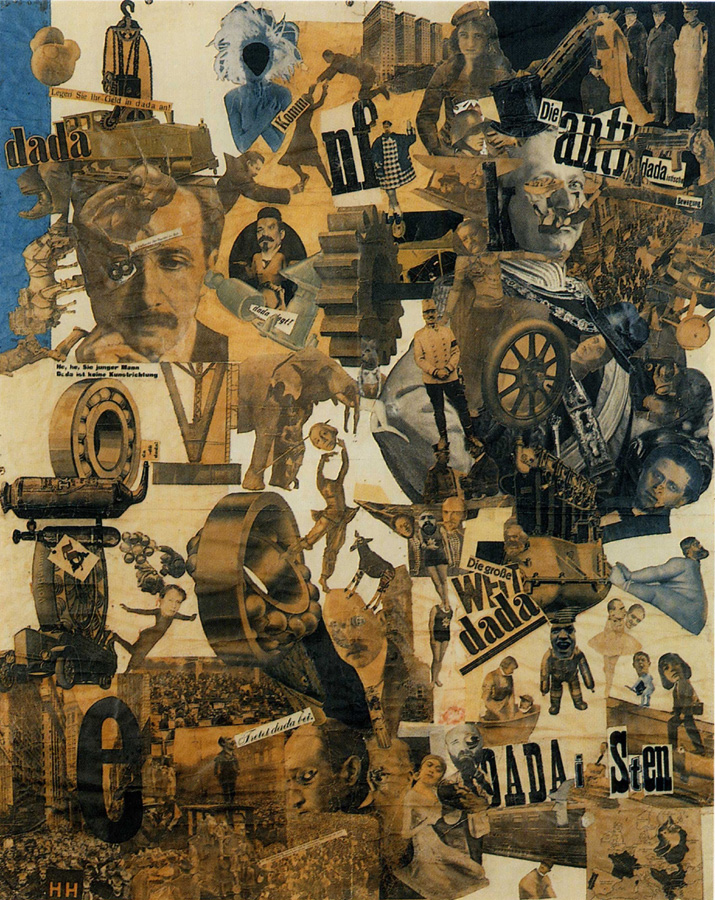 An early 20th-century movement in art, literature, music, and film, repudiating and mocking artistic and social conventions and emphasizing the illogical and absurd.
Expressionism
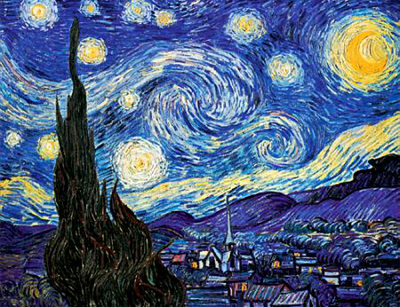 A style of painting, music, or drama in which the artist or writer seeks to express the inner world of emotion rather than external reality.
 Fauvism
A style of painting with vivid expressionistic and non-naturalistic use of colour that flourished in Paris from 1905 and, although short-lived, had an important influence on subsequent artists, especially the German expressionists. Matisse was regarded as the movement's leading figure.
Impressionism
 A style or movement in painting originating in France in the 1860s, characterized by a concern with depicting the visual impression of the moment, especially in terms of the shifting effect of light and colour.
Mannerism
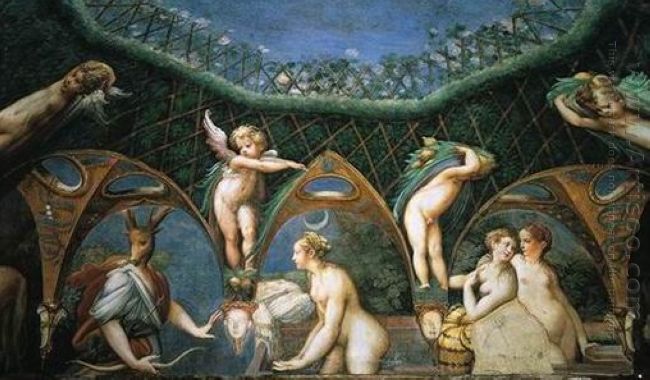 Mannerism is a period of European art that emerged from the later years of the Italian High Renaissance around 1520. It lasted until about 1580 in Italy, when the Baroque style began to replace it, but NorthernMannerism continued into the early 17th century.
Neo-classicism
 Neoclassicism is the name given to Western movements in the decorative and visual arts, literature, theatre, music, and architecture that draw inspiration from the "classical" art and culture of Ancient Greece or Ancient Rome.
Op Art
 A form of abstract art that gives the illusion of movement by the precise use of pattern and colour, or in which conflicting patterns emerge and overlap. Bridget Riley and Victor Vasarely are its most famous exponents.
Pointillism
 A technique of neo-impressionist painting using tiny dots of various pure colours, which become blended in the viewer's eye. It was developed by Seurat with the aim of producing a greater degree of luminosity and brilliance of colour.
 Pop Art
Art based on modern popular culture and the mass media, especially as a critical or ironic comment on traditional fine art values.
Realism
 Realism in the arts may be generally defined as the attempt to represent subject matter truthfully, without artificiality and avoiding artistic conventions, implausible, exotic and supernatural elements.
Surrealism
 A movement in art and literature that flourished in the early twentieth century. Surrealism aimed at expressing imaginative dreams and visions free from conscious rational control. Salvador Dali was an influential surrealist painter; Jean Cocteau was a master of surrealist film.
Vorticism
Vorticism was a short-lived modernist movement in British art and poetry of the early 20th century. It was partly inspired by Cubism.
Pictorealism
 Pictorialism is the name given to an international style and aesthetic movement that dominated photography during the later 19th and early 20th centuries.
Constructivism
Constructivism is basically a theory -- based on observation and scientific study -- about how people learn. It says that people construct their own understanding and knowledge of the world, through experiencing things and reflecting on those experiences.
The New Objectivity
In the period immediately following World War I, much photography was characterized by sharply defined imagery, especially of objects removed from their actual context. The clean lines and cool effects of this style—variously called the “New Objectivity,” the “new vision,” or “Precisionism”—was a reflection, perhaps, of the overarching role of industry and technology during the 1920s.

No comments:
Post a Comment